
The “The Forty-Eighters on Possum Creek” is an annotated translation of a historical novel and roman a clef by the Texas German author W.A. Trenckmann, which was titled in German, “Die Lateiner am Possum Creek.” It was originally serialized in Trenckmann’s Texas German newspaper, Das Bellville Wochenblatt, in 1908. This is its first appearance in translation.
The term ‘Lateiner’ in German has no equivalent in English. It suggests someone with a university background since knowledge of Latin was a sine qua non for university study at the time, but it is also strongly associated with those Germans who emigrated for political rather than economic reasons following the failed revolutions that swept Germany and indeed a good part of Central Europe in 1848. The revolutions had held out hope for democratic reforms that included freedom of speech and assembly and a realistic voice in the government by the rising middle class. When the revolutions collapsed and these hopes were dashed, thousands upon thousands of Germans emigrated to the United States, and a substantial percentage of these made their way to Texas. Here they set up so-called Lateiner communities, reflecting the fact that many of them had university training and that they did not mix all that well with the majority of German immigrants who hailed either from a trade or agricultural backgrounds. But because there is no English equivalent of Lateiner and because the majority emigrated either immediately before or after 1848, I chose to translate the ‘Lateiner’ as ‘Forty-eighter’. Trenckmann’s novel treats the hard choices faced by the German settlers of Possum Creek (read Millheim in Austin County) during the Civil War. Millheim emerged as one of the more important Lateiner communities in Texas and most of its leading settlers fit the profile of political refugees from the failed European revolution(s) of 1848; men and women who had been inspired by democratic ideals in the Old Country, which had been crushed and that they then transferred to the situation they found in Texas. For many slavery was the great fly in the ointment. In the book, the young hero, Kuno Sartorius, has just turned eighteen and is faced with conscription into the Confederate army. What to do? He is torn between his beloved teacher, Herr Lüttenhoff, who is appalled by slavery and hates the Confederacy, and his father, Herr Sartorius, who feels it his son’s duty to serve even in a bad cause. To complicate matters his sweetheart and future wife, Hedwig, the daughter of his teacher, sides with his father in this dispute. Kuno is based loosely on the author’s older brother, Hugo, and indeed most of the characters (and situations) are historical and thus the novel can be classified as a roman a clef. The issues raised are perennial for any democracy and the author offers no easy answers. To my knowledge this is the only Texas Home Front novel written by a contemporary in any language and it occupies, therefore, an important place in Texas literature. With many wonderful vignettes of Home Front life from the rich plantation owners to the humble squatters, the book is a delightful widow into those troubled times. and an important contribution to Texas literature.
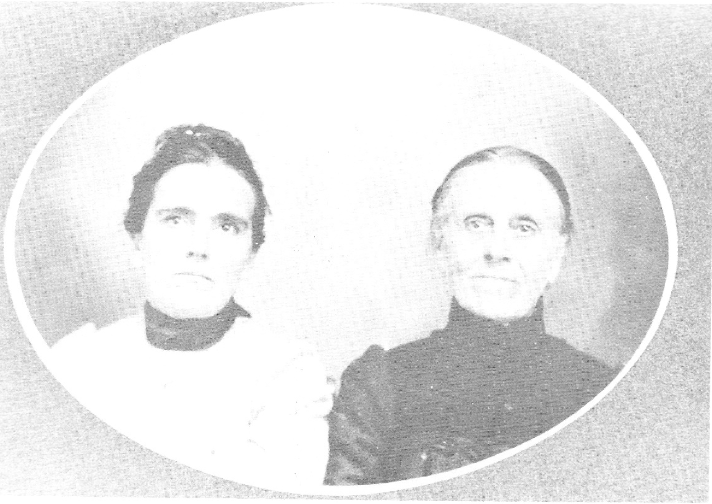
There are also parallels on in my own family history with the situation in Millheim and other German communities in Texas during the Civil War. The German side of my family had settled up and down Richland Creek in North-Central Arkansas before the Civil War. They were a large extended family, father and mother and many children, some married and others not yet of age when they made the move in 1839. By the time the Civil War broke out, all the siblings were married and had children of their own. The sons, however, were all staunch Unionists and had joined the Arkansas Peace Society, a secret society of Unionists, organized to provide mutual support to families of fellow Unionists. They were betrayed. The menfolk who could not escape were rounded up and marched to Little Rock in chains in the dead of winter where they were given the choice of either joining the Confederate Army or being shot. One son, Jonathan, was thus compelled to fight for the Confederacy. Another son, David Crockett Ruff — he had been baptized by the real David Crockett in Giles County Tennessee– managed to escape and joined the Union Army in Missouri where he was commissioned a captain. The two brothers fought each other in the Battle of the Little Blue River (October 21, 1864) where Jonathan was severely wounded. David Crockett survived the war, but the extreme physical stresses of the war wrecked his health, and he died shortly after the war ended. My own great-great grandfather was not so lucky. He was murdered in front of his wife and children by a roving band of ruffians called “Jayhawkers,” who under the pretext of rooting out disloyalty, systematically murdered a robbed the families of known Unionists. Another brother was also robbed and murdered when he tried to flee Arkansas with his family in hopes of taking the Oregon Trail to the Pacific Northwest. The bad blood between the Unionists and the ex-Confederates continued after the war ended, so my great-great grandmother, Mary Caroline (Polly) Ruff-Robertson, pulled stakes with a large contingent of the extended family and moved to Comanche County Texas, which was largely unsettled and still essentially on the Indian frontier. According to family lore, she led the wagon train which undertook the arduous, two-month trek from Searcy County, Arkansas, to Comanche County, Texas. her mother was a Goodnight [Anglicized from the German Gutknecht] and also according to family lore, was encouraged to move to Texas by her famous cousin, Charles Goodnight. “Polly” Ruff Robertson, my great-great grandmother lived to be 96 years old. My mother got to know her well before she passed and fondly recalled the extraordinary stories she told.

 jamesckearney.com